
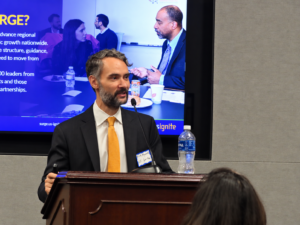
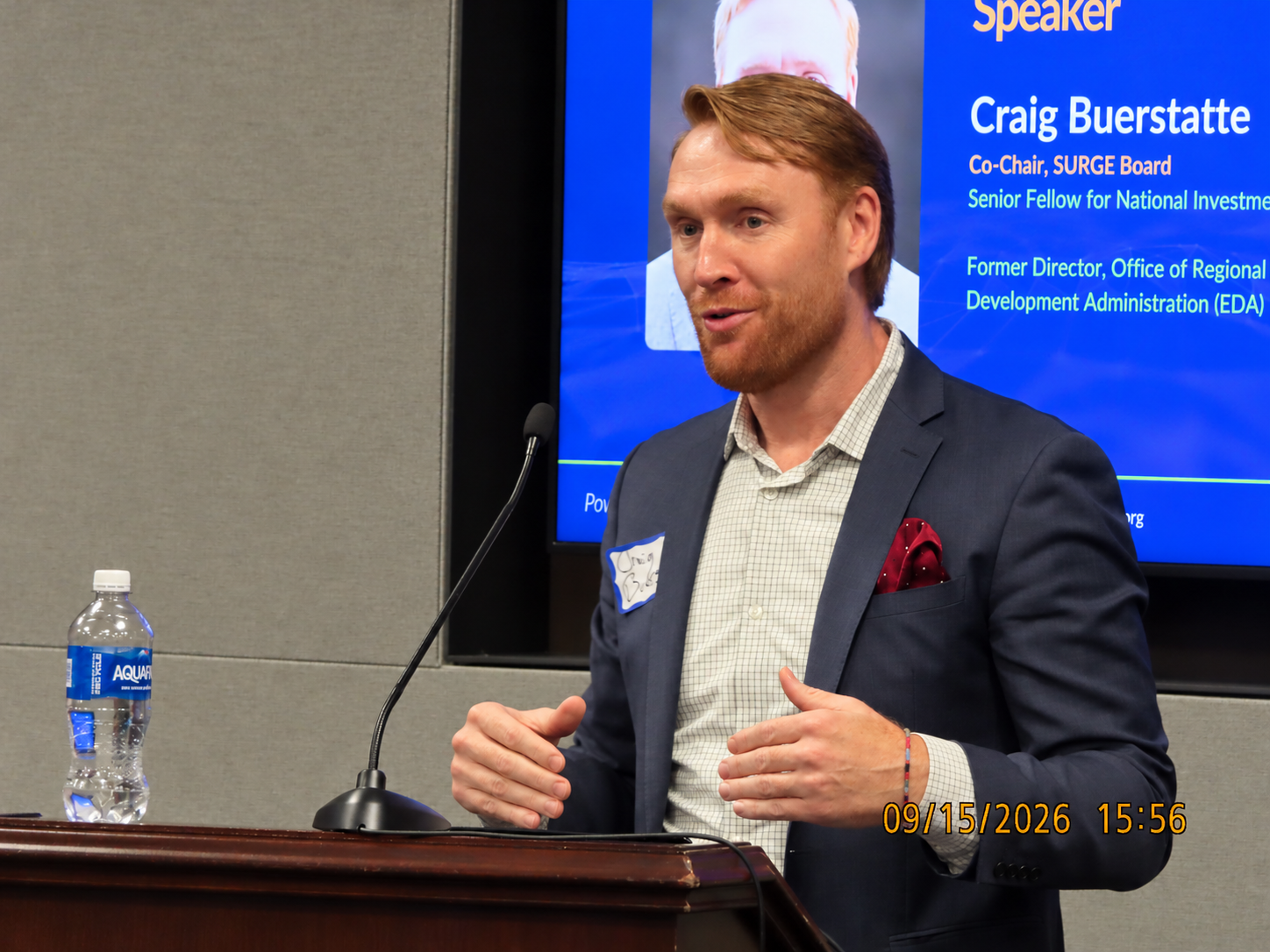
 On September 15, 2026, US Ignite’s SURGE Program brought regional innovation leaders, congressional staff, and the National Science Foundation (NSF) together on Capitol Hill. Countless federal competitions have pushed communities nationwide to identify regional strengths, build coalitions, and determine how local institutions can support major technology and economic opportunities. But what happens to that work between federal investments?
The SURGE Hill Briefing explored this question. The program’s featured speakers examined how regional coalitions can sustain momentum, build partnerships, advance promising strategies, and move toward implementation between major federal funding rounds.
At the briefing, US Ignite also released a white paper titled, “How Regional Innovation Strategies Take Shape: Lessons from Four Coalitions Pursuing Federal Investment,” featuring four regional coalition case studies. The paper complements the discussion with examples of how coalitions are approaching the work of advancing regional innovation and economic growth.

5 Key takeaways from the discussion:
1. Federal funding can be a catalyst, but coalitions need a path forward
Competitive federal programs have brought together universities, businesses, investors, workforce organizations, and state and local governments around ambitious regional strategies. However, communities not selected for funding can lose momentum despite strong partnerships and promising ideas.
2. Speed matters for U.S. competitiveness
Panelists emphasized that lengthy funding timelines can hinder U.S. competitiveness, particularly in rapidly developing technology sectors. Timely funding, clear feedback, and real-time technical assistance can help promising regional initiatives respond to changing markets and international competition.
3. Innovation requires sustained investment and patience
Commercializing new technologies can take years or decades. Panelists emphasized that inconsistent or short-term funding cycles can make it difficult for coalitions to maintain partnerships and move technologies from research to commercialization.
4. Regional coordination prevents fragmentation
Regional challenges often cross traditional agency and sector boundaries. Workforce development, research, manufacturing, infrastructure, commercialization, and investment must work together to achieve lasting economic outcomes.
5. Regional collaboration can connect rural and urban economies
The briefing highlighted how regional coalitions can connect rural communities and smaller organizations to larger research institutions, businesses, infrastructure, and markets, which extends the benefits of innovation beyond major metropolitan areas.
Implications for Federal Policy
Since the event took place at the Hill, the conversation also emphasized several considerations for Congress as it evaluates the future of federal regional innovation programs:
- Create pathways for promising regional coalitions to continue after competitive funding decisions, so that partnerships, strategies, and locally organized capacity do not dissipate while regions pursue their next opportunity
- Provide timely feedback, technical guidance, and mentorship following federal competitions, helping regions understand where their strategies fell short, respond to changing markets, and strengthen future approaches
- Improve continuity and coordination across federal programs and funding cycles, recognizing that commercialization, workforce development, infrastructure, and other components of regional innovation often require sustained work over many years
- Recognize regional coalitions as part of the nation’s innovation infrastructure, supporting the relationships and coordination that allow universities, industry, workforce organizations, government, and other regional partners to pursue shared economic opportunities
The work of regional coalitions does not stop when a funding competition ends. Sustaining that work requires continued coordination, practical support, and a shared commitment to moving regional priorities forward. Through SURGE, US Ignite helps coalitions build on the work they have already done and identify their next steps toward implementation.
Visit surge.us-ignite.org to explore resources and opportunities for your regional coalition.
About SURGE
SURGE (Supporting U.S. Regional Growth & Entrepreneurship) is a US Ignite program supported by the National Science Foundation that helps regional coalitions strengthen their strategies and move from planning towards implementation. SURGE works with regional coalitions that have participated in or applied for competitive federal programs such as NSF Regional Innovation Engines (Engines), Economic Development Administration (EDA) Tech Hubs, and the Build Back Better Regional Challenge (BBBRC), among other federal funding programs.
Through SURGE, regional coalitions receive:
- Expert guidance to identify challenges and strengthen regional strategies;
- Peer learning and networking with regions facing similar challenges;
- Technical assistance and curated resources to support implementation; and
- Connection to a network of experts, partners, and potential funding opportunities to sustain regional economic growth